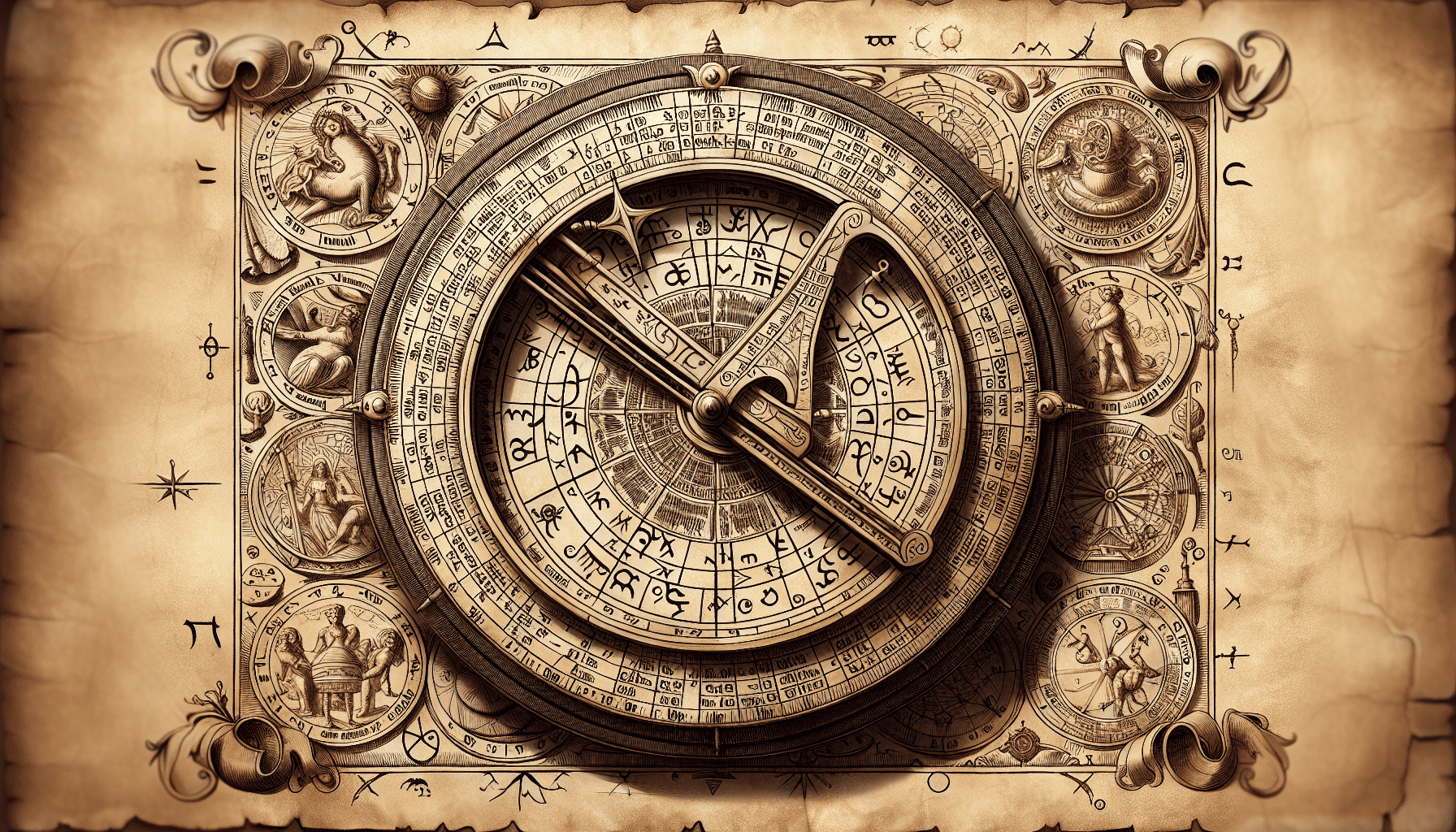
Astrology, an ancient practice that seeks to understand the influence of celestial bodies on human affairs, has woven itself into the tapestry of human culture across millennia. Its origins stretch back to early civilizations where the night sky was both a map and a mystery, guiding navigation, marking seasons, and inspiring the imaginations of those who gazed upward.
The earliest roots of astrology can be traced to the Babylonian empire around the second millennium BCE. Babylonians were among the first to systematically observe celestial phenomena and record their effects on terrestrial events. They divided the sky into recognizable patterns, which eventually evolved into the zodiac—a system still used in astrology today. The Babylonian priests believed the gods communicated through the movement of planets and stars, influencing everything from agricultural success to the rise and fall of empires.
As the Babylonians' insights spread, the practice of astrology was adopted and adapted by subsequent cultures. In ancient Egypt, astrology became intertwined with mythology and the divine. Egyptian astrologers linked celestial bodies with gods and goddesses, infusing astrology with religious significance. Similarly, in China, astrology emerged during the Zhou dynasty (circa 1046-256 BCE), integrating cosmology and Confucian ideals, and influencing everything from politics to personal decisions.
However, it was the Greeks who significantly formalized astrology, merging it with Greek philosophy and science. By the 4th century BCE, astrology was widely practiced across the Hellenistic world. Greek scholars such as Ptolemy expanded Babylonian knowledge and set the foundations for Western astrology. His work, the "Tetrabiblos," remains a keystone text in astrological studies, introducing a model where the positions and movements of celestial bodies are thought to impact human characteristics and destiny.
The Romans further embedded astrology into Western culture. Roman emperors and leaders often consulted astrologers for guidance. With the fall of the Roman Empire and the rise of Christianity, astrology faced skepticism but never completely vanished. During the Islamic Golden Age, scholars preserved and expanded Hellenistic astrological knowledge, which eventually returned to Europe during the Middle Ages, fostering a Renaissance interest amid a backdrop of a burgeoning scientific inquiry.
Astrology experienced a resurgence during the Renaissance, as scholars sought to reconcile it with emerging scientific paradigms. Yet, it remained controversial, especially with the dawn of the Age of Enlightenment, as rationalism and the scientific method began to overshadow mystical explanations of the universe. Despite this, astrology found its way into various aspects of culture, from literature to art, influencing notable historical figures such as Galileo and Kepler, who sought to explore its potential scientific basis.
Today, astrology continues to captivate millions globally. It has evolved beyond traditional practices into a multifaceted phenomenon, integrating psychology and modern spirituality. Despite skepticism and the rise of empirical science, astrology persists, primarily due to its symbolic language, which resonates with personal experiences. Astrological interpretations offer insights that many find relevant to their emotional and spiritual lives, creating a bridge between ancient wisdom and contemporary culture.
Astrology's enduring allure lies in its narrative function; it provides a framework for people to explore their identities and find meaning in the cosmos. As a lens through which humanity has long sought to understand its relationship with the universe, astrology serves both as a historical reflection of culture and as a modern-day guide for self-reflection and connection.